
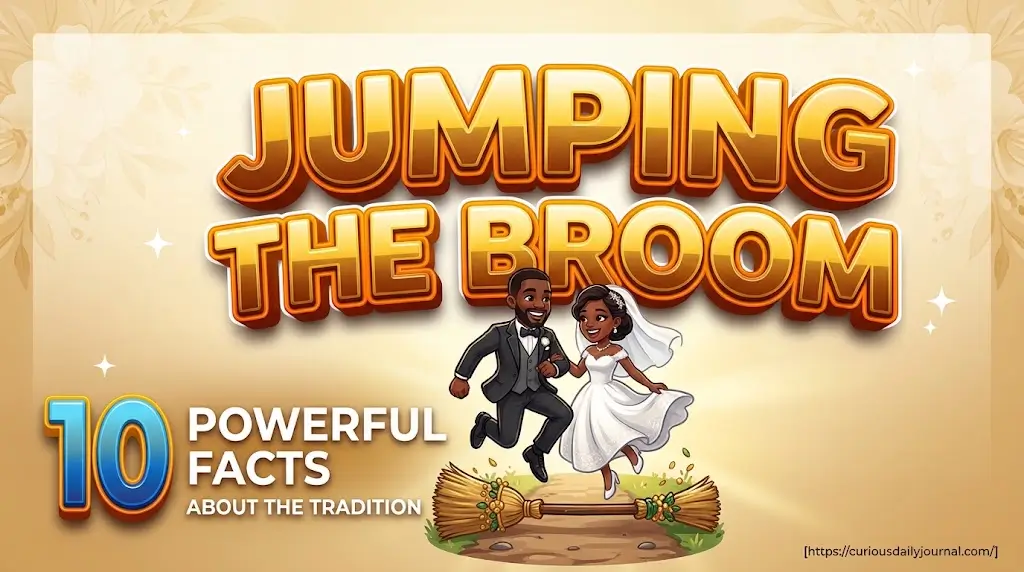
The phrase “jumping the broom” refers to a wedding tradition in which a couple jumps over a broom together as a symbol of starting their married life. In text messages and online conversations, it can mean getting married, celebrating a wedding, or talking about a couple taking the next step in their relationship. The phrase also has deep historical and cultural significance, especially in African American communities. Its meaning depends on the context: someone might use it seriously to discuss a wedding custom or casually to joke about marriage. Understanding the background helps you interpret the phrase respectfully and accurately.
Table of Contents
What Does Jumping the Broom Meaning in Text?
In texting, jumping the broom usually refers to marriage or a wedding ceremony. It may describe a couple getting married, planning a wedding, or honoring a meaningful tradition.
For example, someone might text, “They’re finally jumping the broom next month!” This means the couple plans to get married.
The expression can also be used playfully when friends talk about a relationship becoming serious. However, it does not automatically mean that a couple is getting married immediately. The surrounding conversation helps clarify the meaning.
Common meanings include:
The phrase is not a standard texting abbreviation like “LOL” or “BRB.” It is an established expression connected to a real wedding custom.
Where Does the Phrase Come From?
Jumping the broom is a wedding tradition with historical roots that are often discussed in connection with African American history. Its background is complex, and explanations can vary depending on the community and historical period.
The tradition is widely associated with enslaved African Americans in the United States. Under slavery, enslaved people were often denied the legal right to marry freely and have their marriages recognized by law. In some communities, jumping over a broom became a symbolic way for couples to mark their union.
The broom could represent a transition into a new household or a new stage of life. Over time, the custom became an important symbol of love, commitment, family, and cultural heritage for many people.
It is important not to assume that every couple who uses this tradition has the same reason for doing so. Some embrace it to honor their ancestors and African American heritage. Others appreciate its symbolism or include it as a personal part of their wedding ceremony.
The phrase has also appeared in books, films, family conversations, and online discussions, which has helped more people become familiar with it.
What Does Jumping the Broom Symbolize?
The broom can carry several meanings in a wedding ceremony. The exact symbolism depends on the couple, their family traditions, and the way they choose to celebrate.
Here are some common interpretations:
These meanings are symbolic rather than fixed rules. Couples may choose the tradition for one reason or several reasons at once.
For instance, a couple might include the broom ceremony because their grandparents practiced it. Another couple might use it to recognize African American history and celebrate their marriage in a meaningful way.
How Is Jumping the Broom Used in Text Messages?
People may use the phrase in different ways depending on the conversation. It can appear in wedding announcements, messages to friends, relationship jokes, or discussions about family traditions.
Here are some common examples.
1. Announcing a Wedding
Text: “Guess what? Maya and Chris are jumping the broom in June!”
Meaning: Maya and Chris are getting married in June.
The sender is sharing wedding news in a casual, celebratory way. The phrase makes the announcement sound warm and personal.
2. Talking About Wedding Plans
Text: “We picked the date. We’re finally jumping the broom!”
Meaning: The couple has decided when to get married and is excited about the wedding.
Here, the expression refers to the couple’s upcoming marriage rather than the physical act alone.
3. Teasing a Friend About Marriage
Text: “You two have been together for five years. When are you jumping the broom?”
Meaning: The sender is jokingly asking when the couple plans to get married.
This use may be friendly teasing, but it can also feel intrusive. Marriage is a personal decision, so consider your relationship with the person before using the phrase this way.
4. Celebrating an Engagement
Text: “She said yes! Looks like they’re jumping the broom soon.”
Meaning: The couple is engaged or expected to marry in the near future.
An engagement does not mean the wedding has already happened. In this example, the phrase refers to the anticipated marriage.
5. Sharing a Wedding Tradition
Text: “My cousin is including a broom ceremony in her wedding.”
Meaning: The couple plans to jump over a broom as part of the ceremony.
This example focuses on the actual custom rather than using the phrase as a general reference to marriage.
6. Discussing a Couple’s Future
Text: “They seem serious about each other. I wouldn’t be surprised if they jumped the broom next year.”
Meaning: The sender thinks the couple may get married next year.
The expression communicates an expectation or opinion, not a confirmed wedding plan.
Is Jumping the Broom a Slang Term?
Jumping the broom can sound like slang in a text message, but it is better understood as an established expression tied to a wedding tradition.
People sometimes use it casually, especially when discussing engagements, weddings, or long-term relationships. That informal use does not erase the phrase’s cultural and historical background.
Unlike internet slang that changes quickly, this expression has a history beyond social media. Its meaning is generally recognizable in conversations about marriage, although someone unfamiliar with the tradition may need an explanation.
It is also not a secret code or a phrase with a hidden adult meaning. In ordinary use, it relates to marriage, wedding customs, or a couple’s commitment.
Is Jumping the Broom Only an African American Tradition?
The phrase is strongly associated with African American wedding traditions, particularly because of its connection to the history of enslaved African Americans in the United States. Today, many African American couples include the broom ceremony to honor their heritage, family stories, or cultural identity.
However, historical accounts of broom-jumping customs are not limited to one simple explanation. Similar practices and references have appeared in different places and periods, and the history can be complex. It is best to avoid claiming that every version of the custom has the same origin.
In modern weddings, couples may adopt the ceremony for different reasons. Some have a direct family connection to the tradition. Others learn about it through cultural history, literature, or wedding celebrations.
When discussing the custom, acknowledge its important place in African American history without assuming that all African American couples practice it or that every couple who includes it has the same background.
Respectful language matters because this is more than a decorative wedding trend for many families. It can be a meaningful connection to history, identity, and generations of loved ones.
What Happens During a Jumping the Broom Ceremony?
The ceremony is usually simple. A broom is placed on the ground, and the couple jumps over it together, often near the end of the wedding ceremony or during the celebration afterward.
There is no single required script or universal order. Some couples invite an officiant or family member to explain the tradition. Others include music, personal readings, or words from relatives. Some decorate the broom with ribbons, flowers, or other meaningful details.
A couple might also invite guests to witness the jump as a symbolic start to married life.
The exact timing and presentation are personal choices. Couples should discuss the tradition with family members or knowledgeable community sources if they want to honor a specific cultural or family practice accurately.
The key point is that the jump is symbolic. It does not replace the legal steps required for a marriage to be recognized.
How to Reply When Someone Says “Jumping the Broom”
Your response depends on whether the person is sharing wedding news, making a joke, or asking about the tradition.
Here are a few natural replies:
If you do not understand the expression, it is fine to ask what the person means. A simple question is better than guessing or assuming the phrase has a different meaning.
Common Misunderstandings About Jumping the Broom
Because the expression has both a literal meaning and a broader association with marriage, it can be misunderstood.
Misunderstanding 1: It always means the couple has already married.
Not necessarily. Someone may use it to describe a planned wedding, an upcoming marriage, or a joke about a couple’s future.
Misunderstanding 2: It is just a random phrase from social media.
The expression refers to a real wedding custom with historical and cultural significance. Online use is only one part of its broader history.
Misunderstanding 3: Every couple performs the ceremony in the same way.
There is no single format followed by every couple. The ceremony can vary based on family traditions, personal preferences, and cultural connections.
Misunderstanding 4: It is the legal act that makes a couple married.
The broom jump is symbolic. Legal marriage requirements depend on the laws and procedures of the relevant location.
Misunderstanding 5: Anyone who uses the phrase is making fun of the tradition.
Not necessarily. People may use it respectfully, affectionately, or humorously. Context and tone help show the speaker’s intention.
Frequently Asked Questions
It usually means getting married, planning a wedding, or referring to a couple’s wedding ceremony. It can also describe the tradition of jumping over a broom as a symbol of starting married life together.
Not exactly. An engagement means a couple has agreed to marry. Jumping the broom usually refers to marriage or a wedding tradition, although someone may use it when talking about an upcoming wedding.
For many couples, the act symbolizes a new beginning, unity, commitment, or a connection to family and cultural heritage. The meaning can differ from one couple to another.
It is not inherently tied to one religion. Couples may include it in weddings with different religious or nonreligious backgrounds, depending on their beliefs and traditions.
You can use it playfully when the context and relationship make the joke welcome. Avoid pressuring someone about marriage or treating a meaningful cultural tradition as a punchline.
No. Couples may choose to include the ceremony, but it is not required for every wedding. Its importance depends on the couple’s preferences and cultural or family traditions.
Final Thoughts
The jumping the broom meaning in text is usually connected to marriage, wedding plans, or a ceremony that symbolizes a couple beginning their life together. The phrase can be playful in everyday messages, but it also carries important historical and cultural meaning, particularly in African American communities.
When you see it in a text, look at the surrounding conversation to determine whether the person is announcing a wedding, discussing a tradition, or joking about marriage. Understanding both the casual usage and the deeper background helps you interpret the expression clearly and use it respectfully.